Mom You're Tea-Riffic SVG: An Embroidery Review
As a designer who bridges the gap between digital graphics and tangible textiles, I approach every new file with a specific question: will this actually stitch out beautifully, or is it just a pretty screen image? When evaluating the Mom You re Tea-Riffic Svg Cut File, my focus shifts immediately from its origins as a vector graphic to its potential as a machine embroidery design. While this product arrives as a digital download containing AI and SVG files intended for cutting machines, experienced makers know that these clean, layered vectors are often the perfect foundation for creating custom embroidery projects. The punny, heartwarming nature of this design makes it an instant candidate for Mother’s Day merchandise, but practical execution requires a critical eye toward stitch density, fabric choice, and commercial viability.
Translating Vector Layers into Stitch Types
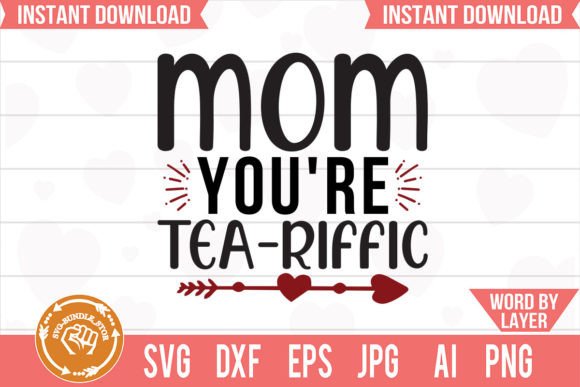
The first thing I look for in any digital embroidery file derived from SVG graphics is the clarity of the separation. Because this download includes "Word By Layer" organization, it offers a distinct advantage for digitizers and hybrid crafters. In a real-world studio setting, this layering allows me to assign specific stitch types to different elements without guessing. For a tote bag design featuring this tea theme, I would likely map the bold lettering to a dense satin stitch for crisp legibility, while converting the illustrative tea cup or floral accents into either applique design sections or lighter fill stitches. This distinction is vital. If you attempt to run the entire graphic as a single heavy fill, you risk a stiff, bulletproof patch that distorts the canvas. Conversely, if the text is too thin for standard thread weight, it will disappear into the weave.
For those using this strictly as a cut file for heat transfer vinyl on custom apparel, the layers ensure you can weed easily and align colors perfectly. However, for us in the embroidery space, we treat these layers as a blueprint. I recommend importing the SVG into your digitizing software to manually verify node counts before stitching. Clean vectors usually translate to smoother stitch paths, reducing jump stitches and trims during production.
Real-World Application: The Custom Kitchen Towel Test
To truly judge the Mom You re Tea-Riffic Svg Cut File, I mentally place it onto a textured terry cloth kitchen towel—a classic handmade product for this niche. This scenario presents immediate challenges that define whether a design succeeds or fails. Terry cloth has high pile and texture; fine details get lost. If the tea illustration in this SVG contains intricate line work thinner than 2mm, it will sink into the loops of the towel and become invisible after washing.
In this context, I would adapt the design by adding a knockdown stitch underneath the embroidery area or simplifying the artwork to bolder shapes suitable for sweatshirt embroidery or towels. The phrase "Tea-Riffic" relies entirely on readability. On a curved surface like a mug cozy or a cap, horizontal alignment becomes tricky. The layered nature of this file helps here, as I can adjust the spacing between "Mom," "You're," and "Tea-Riffic" independently to accommodate the curve of a hat brim without distorting the individual letters. This flexibility is what separates a professional finished product from an amateur attempt.
Fabric Constraints and Stabilizer Strategy
Not all fabrics welcome this type of whimsical typography with equal grace. When planning baby embroidery items like bibs or onesies using this design, fabric stretch is the primary enemy. Knits require significant stabilization to prevent puckering around the satin columns of the text. I always advise testing on scrap fabric first, specifically matching the weight and stretch of your final garment. If you are producing commercial embroidery for a boutique, consistency across fifty sweatshirts matters more than getting one sample right.
Consider the contrast as well. A light-colored tea graphic on a white towel requires tone-on-tone texture to be visible, whereas dark fabric demands high-contrast thread colors. Before committing to a full production run, create a black and white mockup of your thread palette. Does the design still read clearly without color reliance? If not, the structural integrity of the digitization needs adjustment. Remember, while the Mom You re Tea-Riffic Svg Cut File provides the visual roadmap, your choice of stabilizer, needle size, and tension determines the tactile quality. For lightweight wovens, a tear-away might suffice, but for stretchy performance wear or plush blankets, a cut-away mesh is non-negotiable to maintain shape over time.
Commercial Viability for Etsy Sellers and Makers
For the Etsy seller or small shop owner, this design sits squarely in the high-demand personalized gift category. However, market saturation means your execution must be flawless. Customers trust sellers who demonstrate expertise. When listing items made with this asset, showcase close-ups of the stitch texture, not just flat digital previews. Highlight how you’ve adapted the design assets for durability. Did you reinforce the corners? Is the lettering sized appropriately for the garment scale? These details signal professionalism.
Furthermore, understand the licensing. The product description specifies a digital download with AI and SVG files. It does not explicitly state commercial embroidery rights. As a responsible business owner, you must verify if you are permitted to sell physical goods embroidered with this design or if it is restricted to personal use/cut-file applications. Never assume. Clarifying this protects your shop from IP issues. If cleared for commercial use, this design works exceptionally well for bundled offerings—pair a tea-riffic embroidered apron with a matching oven mitt for a higher perceived value holiday embroidery set.
Designer Notes for Optimal Results
Before you hoop up your best linen or fleece, run through this practical checklist to ensure the Mom You re Tea-Riffic Svg Cut File translates successfully from screen to stitch:
- Verify Hoop Size Compatibility: Measure the actual dimensions of the SVG when imported. Resize within your digitizing software, not just your machine editor, to preserve stitch density ratios.
- Check Small Text Legibility: If any part of "Tea-Riffic" drops below 4mm height, consider switching to a running stitch outline or removing the detail entirely. Satin stitch cannot physically render microscopic serifs.
- Test Thread Contrast: Stitch a sample on both light and dark backgrounds. Ensure the pun remains readable in low-light conditions, as kitchen and nursery lighting varies.
- Evaluate Washability: If making tea towels or baby items, wash-test your sample. Does the dense text pucker? Do the applique edges fray? Adjust pull compensation accordingly.
- Mockup Realistically: Use printable mockups that show fabric grain and shadow. Flat vector images mislead customers about the raised, textured reality of embroidery.
- Layer Management: Utilize the provided word-by-layer structure to optimize color changes. Group similar thread colors together to reduce machine stops and increase production efficiency.
Ultimately, the Mom You re Tea-Riffic Svg Cut File is a charming starting point with strong emotional resonance for gifting. Its success as an embroidered patch, apparel accent, or home decor item depends entirely on your willingness to treat the vector file as a raw material rather than a finished solution. By respecting the physics of thread and fabric, and by validating technical constraints before production, you transform a simple digital pun into a cherished, high-quality handmade heirloom. Always prioritize the tactile experience over the digital preview, and your customers will feel the difference in every stitch.