My Favorite Actor Calls Me Mom: Design Review
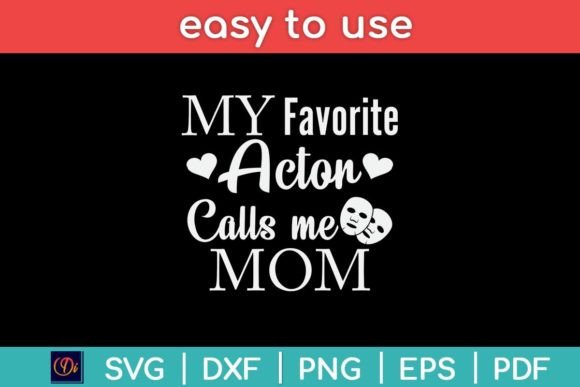
As a professional embroidery digitizer and product reviewer, I approach every new graphic with a specific question: will this actually stitch out well on fabric? When evaluating My Favorite Actor Calls Me Mom, my first impression is that it carries a distinct theatrical personality. The phrase itself suggests a playful, proud, and slightly humorous tone that resonates deeply with theatre moms and parents of performers. Visually, the layout typically associated with this type of SVG design leans toward bold, readable typography mixed with performance-inspired motifs like masks, stars, or spotlights. For an embroidery project, this mood is excellent because it translates emotion into thread, but it also demands careful technical consideration to ensure the humor lands without getting lost in puckered fabric or illegible lettering.
Translating Vector Graphics to Stitched Reality
It is crucial to remember that My Favorite Actor Calls Me Mom is originally marketed as a print cut file compatible with Cricut and Silhouette machines. As an embroidery designer, this signals that I am likely working with a vector source rather than a pre-digitized machine embroidery design. This distinction matters immensely for your craft business or personal project. Vectors are clean and scalable, which is perfect for creating custom apparel or wall decals, but they lack stitch direction, density maps, and underlay data. Before loading this onto your embroidery machine, you must verify if you have received a properly digitized embroidery file or if you need to digitize the SVG yourself.
If you are digitizing this graphic from scratch, the text-heavy nature of the design requires strategic planning. The words "My Favorite Actor" and "Calls Me Mom" need to be balanced so neither overpowers the other. In a real-life scenario, such as creating a custom sweatshirt for a theatre mom attending opening night, I would recommend using a combination of fill stitch for larger block letters and satin stitch for accent elements. Running stitch might work for delicate script details, but only if the size permits. Always check the minimum height requirements for your font choice; anything under 4mm risks becoming a tangled mess of thread knots during production.
Real-World Application: The Opening Night Tote Bag
To truly test the viability of this design, let’s imagine a specific client project: a canvas tote bag intended as a personalized gift for a mother supporting her child in a school play. Tote bags are fantastic small shop products because they offer a stable, flat surface for embroidery. However, canvas has a pronounced fabric texture that can swallow fine details. When stitching My Favorite Actor Calls Me Mom on this material, I would increase the stitch density slightly to ensure full coverage against the weave of the bag.
For this application, I envision placing the design centrally, roughly four inches wide. This hoop size allows the text to remain legible from a conversational distance while keeping the stitch count manageable for commercial embroidery efficiency. If the design includes graphical elements like comedy and tragedy masks, those should be simplified for embroidery. Intricate shading that looks great in a digital mockup often becomes a dense, bulletproof patch of thread when stitched. Instead, use color blocking with distinct thread colors to define shapes. This approach maintains the visual appeal and handmade presentation without compromising the drape or utility of the finished product.
Navigating Fabric Challenges and Stabilization
While tote bags are forgiving, many makers want to use this design on stretchy fabrics like t-shirts or baby clothes. This is where caution is necessary. Stretchy knits require significant stabilization to prevent distortion. When embroidering My Favorite Actor Calls Me Mom on a jersey knit tee, I always use a cut-away stabilizer rather than tear-away. The design’s text elements act as anchors; if the fabric shifts during stitching, the letters will misalign, ruining the professional look essential for Etsy sellers and boutique branding.
Dark fabrics present another challenge. If you are stitching white text on a black sweatshirt, you must account for push-pull compensation. Dark threads tend to recede visually, while light threads expand. Without proper compensation settings in your embroidery software, the final product may look uneven. Furthermore, if the design features thin connecting lines between letters, these are high-risk areas on textured or dark fabrics. Consider adding a subtle running stitch outline or increasing the column width to ensure clarity. Always test on scrap fabric first; what looks crisp on screen can disappear into the nap of a fleece blanket or towel.
Commercial Viability and Brand Consistency
For creative entrepreneurs and Etsy sellers, My Favorite Actor Calls Me Mom represents a niche opportunity. Theatre parents are passionate buyers who value recognition and specificity. However, selling finished products requires more than just good stitching; it requires trust. Your listing photos should include printable mockups alongside actual photos of the embroidered item. This demonstrates that you understand both the digital design assets and the physical execution. Buyers need to see how the design interacts with fabric texture and how the thread colors pop in natural lighting.
Brand consistency is equally important. If your shop specializes in minimalist aesthetics, ensure the font style of this design aligns with your existing catalog. A jarring mismatch can confuse customers. Additionally, consider the giftability factor. This design works exceptionally well for holiday embroidery or end-of-season cast gifts. Positioning it as a seasonal or event-specific item can drive engagement. Just be mindful of licensing. Since the original description highlights compatibility with cutting machines, confirm whether your purchase includes commercial rights for machine embroidery. Never assume that buying an SVG grants permission to sell digitized versions or mass-produced embroidered goods. Respecting intellectual property protects your business reputation.
Technical Checklist for Makers
Before you commit My Favorite Actor Calls Me Mom to a final product, run through this practical checklist to ensure success:
- Verify File Type: Confirm you have a true embroidery file (PES, DST, JEF, etc.) and not just a vector SVG unless you plan to digitize it yourself.
- Check Licensing: Review the terms specifically for commercial embroidery use and digital resale restrictions.
- Test Stitch Density: Run a sample on your target fabric to check for gaps or excessive bulk, adjusting density as needed.
- Evaluate Small Details: Measure the smallest text elements; resize the entire design up if any lettering falls below 5mm in height.
- Select Proper Stabilizer: Match stabilizer weight to fabric stretch and design density; use adhesive spray for slippery materials.
- Contrast Check: View the design in grayscale or black and white to ensure readability relies on value contrast, not just color hue.
- Mockup Validation: Create realistic previews showing the design on the actual garment type to set accurate customer expectations.
Final Thoughts on Design Execution
My Favorite Actor Calls Me Mom is more than just a cute saying; it is a test of your technical adaptability as a maker. Whether you are producing a single personalized gift or stocking a craft business inventory, the success of this design lies in respecting the transition from screen to stitch. By paying attention to stabilization, digitizing integrity, and fabric compatibility, you transform a simple graphic into a cherished keepsake. The theatre community values craftsmanship, and delivering a clean, durable, and visually balanced embroidered product is the best way to honor that sentiment. Take the time to test, adjust, and refine, and your finished product will undoubtedly earn its own applause.