Oh Mom I Love You: A Designer’s Embroidery Review
When evaluating a new machine embroidery design for my studio, I look past the digital preview and immediately imagine how it will behave under the needle. The "Oh Mom I Love You" graphic catches the eye as a sentimental staple, but as an experienced designer and product reviewer, I need to know if it translates into a high-quality finished product. This review breaks down the practical realities of stitching this design, specifically for craft business owners, Etsy sellers, and makers who need reliable design assets that perform well on real fabrics.
First Impressions and Emotional Resonance
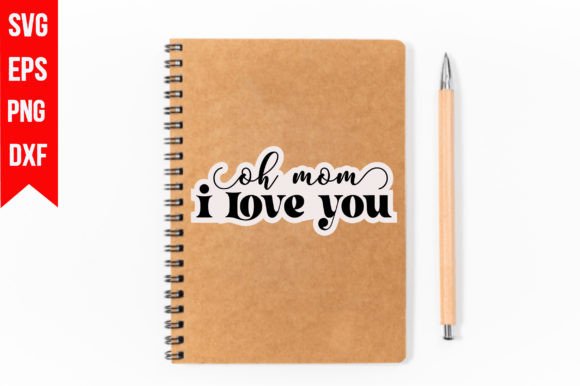
My initial assessment of "Oh Mom I Love You" is that it carries a warm, nostalgic weight essential for Mother’s Day or birthday projects. The typography appears balanced, suggesting it was created with legibility in mind—a critical factor when converting graphics into an embroidery file. Unlike overly ornate scripts that can become muddy when stitched, this design seems to prioritize clean lines. For a handmade product, this clarity builds customer trust; buyers want to read the sentiment instantly without squinting at thread piles.
As a graphic intended for cutting machines like Cricut or Silhouette, the vector paths are likely smooth. However, for embroidery, those smooth curves must translate into appropriate stitch types. I anticipate this design would work beautifully as a combination of satin stitch lettering and perhaps a subtle fill stitch accent. The mood is undeniably affectionate, making it a prime candidate for personalized gift items where emotional connection drives the sale.
Real-World Application: The Custom Sweatshirt Test
To truly judge this design, I mentally placed it on a mid-weight cotton fleece sweatshirt, a bestseller in my shop during spring. In this scenario, "Oh Mom I Love You" serves as a centerpiece for custom apparel. The layout suggests it would sit perfectly across the chest or centered on the back. When embroidering on fleece, fabric texture is a major variable. The pile of the sweatshirt can swallow thin stitches, so I would recommend increasing the stitch density slightly or using a water-soluble topping to keep the lettering crisp.
For a tote bag design, the application shifts. Canvas is stable but thick. Here, the design’s potential size matters. If the original SVG is scaled up for a large tote, the digitizer must ensure the satin columns do not exceed the machine’s maximum width to prevent looping. Conversely, for baby embroidery on a onesie, the design must be scaled down significantly. This is where caution is needed; reducing "Oh Mom I Love You" too much could cause the internal counters of letters like 'o' or 'e' to close up. Always verify the minimum readable size before committing to a production run of baby items.
Navigating Fabric Challenges and Hoop Limitations
Every embroidery project has constraints. While "Oh Mom I Love You" is versatile, certain applications require extra diligence. I would approach stretchy knits and performance fabrics with care. Without proper stabilizer, the tension from dense lettering can distort the garment, causing the "love" in "Oh Mom I Love You" to pucker. Using a cut-away stabilizer is non-negotiable here to maintain the integrity of the design over time.
Caps and curved surfaces present another hurdle. If you plan to use this for hat embroidery, confirm the design fits within your cap frame’s safe zone. Text that wraps too far around the curve will distort. Additionally, dark fabrics demand high contrast thread colors. A white or cream thread on navy blue fleece makes the message pop, whereas tonal threads might get lost. Always test color combinations on scrap fabric first; what looks good on screen often differs in physical thread sheen.
Be mindful of washability. As a holiday embroidery piece or kitchen towel, this item will face frequent laundering. Ensure the design does not have excessively long jump stitches that could snag. If the digitization includes decorative flourishes, check that they are anchored securely. A commercial embroidery product must withstand wear, and structural integrity is just as important as visual appeal.
Commercial Viability for Sellers and Makers
For the Etsy seller or small shop owner, "Oh Mom I Love You" represents a strong seasonal revenue stream. Its universal theme allows for broad marketing appeal. However, professionalism separates hobbyists from businesses. Before listing any small shop product, create a printable mockup to visualize placement. Does the design align with your brand aesthetic? Is the sizing proportional to the garment?
Licensing is paramount. Since this is described as an instant download compatible with cutting software, you must explicitly verify the commercial usage rights for embroidery. Some designers allow selling finished goods but prohibit distributing the digital embroidery file itself. Clarifying this protects your business and respects intellectual property. Furthermore, if you are modifying the design—changing fonts or adding elements—ensure your license covers derivative works.
Customer engagement often hinges on presentation. When photographing your finished product, show the texture of the stitches. Buyers want to see that "Oh Mom I Love You" isn't just printed ink but tangible, quality needlework. Highlighting the craftsmanship in your listing photos validates the price point and reinforces the value of handmade goods.
Essential Pre-Stitch Checklist for Success
Before loading "Oh Mom I Love You" into your machine for a client order or personal keepsake, run through this practical checklist to avoid costly mistakes:
- Verify File Compatibility: Confirm the downloaded file converts correctly to your specific machine format. Not all SVG-to-embroidery conversions retain perfect node placement.
- Check Stitch Count and Density: Open the file in your editing software. Ensure the density matches your target fabric weight. Adjust if necessary to prevent bulletproof stiffness or fabric show-through.
- Test on Scrap Material: Never stitch directly on a final product without a test run. Use the exact fabric and stabilizer combination intended for the project.
- Inspect Small Details: Zoom in to 200% in your software. Look for overlapping stitches or tiny gaps that could cause registration issues during actual stitching.
- Evaluate Thread Contrast: Stitch out a sample in black and white to check value contrast independent of color. This ensures readability regardless of the thread palette chosen.
- Confirm Hoop Size Requirements: Measure the design dimensions accurately. Ensure there is adequate clearance within your hoop to prevent the foot from hitting the frame edges.
- Review Licensing Terms: Double-check whether the license permits selling physical embroidered items versus digital files. Document this for your business records.
Final Thoughts on Design Utility
"Oh Mom I Love You" holds significant potential for makers focusing on family-centric crafts and personalized merchandise. Its strength lies in its emotional directness and adaptability across various mediums, from embroidered patch creation to nursery decor. However, success depends entirely on the maker's technical execution. By respecting fabric limitations, verifying digitization quality, and adhering to professional testing standards, this design can become a reliable asset in your creative toolkit.
Ultimately, the value of any graphics package is determined by how well it survives the transition from screen to stitch. Treat "Oh Mom I Love You" not just as a cute phrase, but as a technical blueprint requiring your expertise to shine. When executed with precision, it delivers the kind of heartfelt quality that turns one-time buyers into loyal patrons of your handmade business.